

GUEST ESSAY Why Kindness Still Matters
By Lawrence Hinman
In a world that often seems to reward aggression, competition and self-interest, kindness can appear to be a weakness — a soft virtue for softer times. Yet nothing could be further from the truth.
Kindness is one of the most powerful forces available to us, capable of transforming individuals, communities and even societies. It costs nothing to give, yet its value is immeasurable. Understanding the importance of kindness means recognizing it not as mere niceness or politeness, but as an active choice that shapes the fabric of human connection and determines the quality of our shared existence.
At its core, kindness is an expression of our shared humanity. When we act with kindness, we acknowledge that the person before us has feelings, struggles and dreams just as real as our own. This recognition breaks down the barriers of isolation and alienation that characterize so much of modern life.
A simple act — holding a door, offering a genuine compliment, listening without judgment — sends a profound message: you matter, you are seen, you are not alone. In moments of kindness, we step outside the narrow confines of our own concerns and participate in something larger than ourselves.
SMALL ACTS, BIG CHANGE
The ripple effects of kindness extend far beyond the immediate interaction. Research has shown that acts of kindness trigger the release of oxytocin and serotonin — chemicals that promote feelings of contentment and well-being in both the giver and receiver.
Witnesses to acts of kindness also experience elevation, an emotional state that inspires them to act kindly in turn. This creates a cascade effect in which a single generous gesture can multiply exponentially, touching lives in ways we may never fully comprehend. A teacher’s encouraging word might inspire a student to pursue a dream. A stranger’s smile might pull someone back from the edge of despair.
We vastly underestimate the power we hold to
influence the trajectory of another person’s day, or even their life.
Moreover, kindness builds the social capital that holds communities together. Trust, cooperation and mutual support do not emerge spontaneously; they are cultivated through countless small acts of consideration and care. When neighbors help one another, when colleagues offer support during difficult times, when strangers extend help without expectation of reward, they create networks of reciprocity and goodwill.
These networks become the safety nets that catch us when we fall and the ladders that help us climb. In times of crisis, it is not the ruthless or the selfish who prove most valuable, but those who have cultivated relationships rooted in kindness and compassion.
THE COURAGE TO BE KIND
Yet kindness should not be confused with passivity or the avoidance of difficult truths. True kindness sometimes requires courage — the courage to speak honestly, to set boundaries, to challenge injustice. It can mean caring enough to have uncomfortable conversations or to intervene when someone is being
harmed.
Kindness toward oneself might mean saying no to unreasonable demands or walking away from toxic relationships. The goal is not to be liked by everyone or to avoid all conflict, but to act from a place of genuine concern for the well-being of all involved.
Perhaps most importantly, kindness is a practice that transforms the one who gives it. Each time we choose kindness over indifference, patience over irritation or generosity over selfishness, we strengthen those qualities within ourselves. We become the kind of people we want to see in the world.
Viktor Frankl, a Holocaust survivor, wrote, “Everything can be taken from a man but one thing:
the last of the human freedoms — to choose one’s attitude in any given set of circumstances.” Even in the darkest moments, the choice to remain kind preserves our humanity and dignity.
In conclusion, kindness matters because people matter. It is both the oil that allows the machinery of society to function smoothly and the light that makes the journey worthwhile. It requires no special talents, no wealth, no power — only the willingness to see beyond ourselves and act with care.
In a complex world full of problems that seem too large to solve, kindness offers something we can all do, right now exactly where we are. It is both profoundly simple and radically transformative. The world we want to live in begins with the choices we make in each moment, and there is no choice more fundamental, or more important, than the choice to be kind.
________________
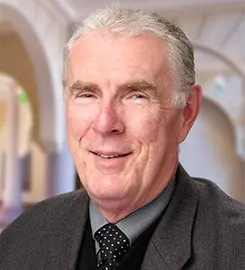
Lawrence Hinman is an emeritus professor of philosophy at the University of San Diego, where
he taught for forty years. He has written books and articles on ethics and founded ethics centers. He has enjoyed it all, concentrating in the last two decades on ethical issues at the frontiers of science. Click here for a more extensive biography.